Apartheid-related Films
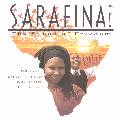
SARAFINA! 4 STARS
It stars Leleti Khumalo and Whoopi
Goldberg (and Whoopi is NOT Sarafina, contrary to very popular belief),
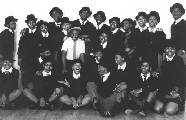
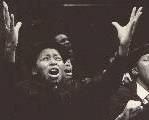
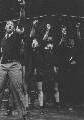
and is defintely one of the definitive Apartheid movies. It is a musical that tells the story of the kids in 1970s
South Africa and the struggle they go through with the booers, the system,
and each other. It is tragic (and can get very violent at some parts),
and yet it is uplifting. "Freedom is coming tomorrow," they all sing.
The movie shows that despite hardships, the people continued to
look to the future. The children in the movie see freedom in the form
of Nelson Mandela, and Sarafina wants the school musical to star her as
Mandela finally free from prision. I recommend this film, not only for the
story, but also for the music. I recently bought the soundtrack to the film,
and I find myself listening to it all the time. It even made me want to learn
Zulu. Unfortunately at the library, there are no "Teach Yourself
Zulu" books, and to buy one would cost more money than I've got. SARAFINA! did start out on Broadway before it
was made into a film. Mbongeni Ngema wrote the film and the Broadway musical.
He also wrote the songs for, co-choreographed, sung in, and acted in both
productions.
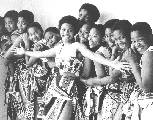
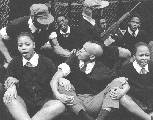
Recently I purchased a record of the Original Broadway Cast Recording of
SARAFINA! The theatrical show, which opened in South Africa in 1987 and on
Broadway in 1988, includes some of the same songs as the movie, and some
additional ones also. I just visited an online CD ordering site, and they are
offering a copy of the Broadway recording which includes even more songs on my
record. Which means I guess I'll end up buying that one, too. The lyrics
(when not in English) are in Zulu, a language I love and am anxious to learn.
I recommend both the movie and Broadway soundtracks; both offer up some great
songs.
THE POWER OF ONE
3 1/2 STARS because it's not excellent like SAFARFINA! yet it's definitely worth
seeing. It is about a white English boy and his struggles with the prejudice of South
Africa just before the institution of official apartheid laws.
He is harrassed as a small boy in a boarding school by a Nazi Afrikaner who
pisses on him and attempts to kill him. After being taken out of the school, he is sent
to live with an old German. The German teaches him all about
nature and life before he is sent to prison so that the British can show off the culture
of South Africans during WWII. The English boy, P.K., visits the German everyday in
prison and befriends the black prisoners there and takes up boxing.
He soon becomes part of a myth, the story
of the rainmaker who brings all the tribes together, because P.K. arranges a concert in
which all the black tribes sing a song in their native tongue for the white soldiers
(unbeknownst to the soldiers, though, the lyrics call them cowards). This
rainmaker title sticks with him and when he is 18 he is contacted by a black boxer who
wants to fight him inside of one of South Africa's townships. If the black man wins, it is
a triumph for his people, it will urge them to keep up the struggle for freedom; and if he
loses, they will play on the rainmaker myth and P.K. must urge the black to band together.
P.K. wins the fight and thus becomes entangled. He has fallen in love with the daughter
of a conservative Afrikaner who invented some of the laws of apartheid. And one night, during an
attack on a Saturday school that P.K. has set up to teach blacks how to teach English to others,
the daughter is accidentally killed while pushing P.K. out of the way of a policeman's club. This
event makes P.K. want to give up, but he realizes that he is needed more than ever. He and the
black boxer set out on a journey across South Africa to band together the tribes, to make them one.
This is probably more summary than you ever thought you wanted, but I'm thorough. The movie
was actually better than I thought it would be, though it always disappoints me when a movie
takes place before the apartheid laws are actually instituted. The acting was very good,
especially in the case of the actor who played the seven year-old P.K. Also it was quite
intriguing for me to see a white man speaking the native languages like Zulu and Swahili
because I've always wanted to learn Zulu and I've been wondering what the reaction would be
if I showed up in South Africa speaking it.
A DRY WHITE SEASON
3 1/2 STARS I should have written about this movie right after I saw it, because now
I can hardly remember it at all. So don't be surprised if I don't give such a complete
summary as portrayed above. But I do know that it stars Donald Sutherland as an Afrikaner whose
eyes are opened after his black gardener and his gardener's son are both disappear and
are later found out to have been killed by the police. Sutherland loses his family and his job
due to the fact that he has suddenly turned liberal. He is followed and his house is raided and
even bombed. This movie very accurately portrays the injustices of the judicial system in South
Africa during the 1980's (and before and after). It can very graphic at parts, but the good thing is:
justice is served. And this almost seems unlikely and surreal and impossible considering.
The ending makes the viewer happy, but it made me question it all. It made me wonder if it such
a thing could ever really happen. As if to say it was just another Hollywood ending. Check it
out nonetheless.
CRY FREEDOM 3 STARS In
my video guide it got four and a half, but technically I considered it a bit slow, it seemed to
go on almost forever. I don't know how long the movie actually was, but it seemed close
to three hours. None the less, this nonfictional film does shock and dismay you at some moments. The movie
stars Denzel Washington as exiled (and black) activist Steve Biko and Kevin Kline as
liberal, white, newspaper editor and eventual friend of Biko, Donal Woods. Biko was one
of the great black leaders. He was forced to live a life hiding from the authorities, and
was allowed to be in any one room with only one other person. Woods befriends Biko
after much debate between the two. Eventually Biko is taken to prison and dies there.
Much controversy still surrounds his death. Officially he died from a hunger strike. In
recent hearings, though, it has come out that five officers beat Biko almost to death
(supposedly Biko provoked them). And after the beating, instead of taking Biko to one of
the nearby hospitals, he was driven in an ambulance to one that was (if I remember correctly)
almost an hour away. It was the unstable and unnecessarily long ride in the ambulance, along with the actual beating,
that caused Biko's death. Woods found it necessary that the truth be told about Biko's
death and that the people of the world finally realize what was happening in South
Africa. At the end, Woods flees the country to fly to England where he will publish a book he's written on
apartheid. One of the most memorable parts of the movie is at the very end, before the
credits roll. A long list of people's names and the official causes for their deaths, which
include: fell from ten stories, hunger strike, natural causes, unknown, and suicide by strangulation.
It amazed me.
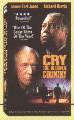
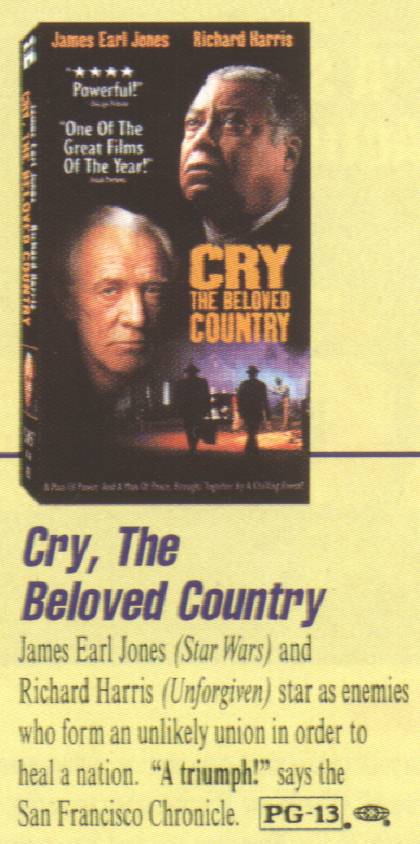
CRY, THE BELOVED COUNTRY
Another 3 STARS I loved the book. It was the first book report book that I
actually thoroughly enjoyed. The film (as well as the book) takes place before
apartheid has actually been instituted, and that is why the story is so pertitent. It
shows us how long all of this has been going on. The crumbling of sane and fair society,
the injustice that befell the people of South Africa, the fear they must have felt.
I have to say that the movie didn't fully capture the essence of the book, I'm obligated
to say so. But I've been told more times than I can count that I have to look at the
film alone, the film as a film, and the not the film as a book made into a film. It stars
James Earl Jones and Richard Harris, and my old pal Leleti Khumalo (from SARAFINA!) also
plays a small role. The movie is well done with wonderful performances. The
injustice isn't too expanded upon or as apparent and complete as it should be, as it
was meant to be. But it provides a great look into South Africa before the institution
of apartheid.
MANDELA
I give it only 2 STARS It's great if you want to know all there is to know
about Nelson Mandela's life, or if you have to do a report about the man. But
for pure apartheid movie entertainment, I wouldn't recommend it. It is a
documentary chronicling the entire life of Mandela, the black leader imprisioned
for some twenty years and who's release in 1990 triggered the virtual end
to apartheid. It can be boring to the person who isn't too interested in the subject
or who has a short attention span. But if you are genuinely interested in the
life of Mandela, and you want to learn just a little bit more about the history
of South Africa and apartheid, then pick this up. It isn't the most enthralling
piece of filmwork, but it is informative.
Apartheid
Apartheid-related Films
SARAFINA! 4 STARS
It stars Leleti Khumalo and Whoopi
Goldberg (and Whoopi is NOT Sarafina, contrary to very popular belief),
and is defintely one of the definitive Apartheid movies. It is a musical that tells the story of the kids in 1970s
South Africa and the struggle they go through with the booers, the system,
and each other. It is tragic (and can get very violent at some parts),
and yet it is uplifting. "Freedom is coming tomorrow," they all sing.
The movie shows that despite hardships, the people continued to
look to the future. The children in the movie see freedom in the form
of Nelson Mandela, and Sarafina wants the school musical to star her as
Mandela finally free from prision. I recommend this film, not only for the
story, but also for the music. I recently bought the soundtrack to the film,
and I find myself listening to it all the time. It even made me want to learn
Zulu. Unfortunately at the library, there are no "Teach Yourself
Zulu" books, and to buy one would cost more money than I've got. SARAFINA! did start out on Broadway before it
was made into a film. Mbongeni Ngema wrote the film and the Broadway musical.
He also wrote the songs for, co-choreographed, sung in, and acted in both
productions.
Recently I purchased a record of the Original Broadway Cast Recording of
SARAFINA! The theatrical show, which opened in South Africa in 1987 and on
Broadway in 1988, includes some of the same songs as the movie, and some
additional ones also. I just visited an online CD ordering site, and they are
offering a copy of the Broadway recording which includes even more songs on my
record. Which means I guess I'll end up buying that one, too. The lyrics
(when not in English) are in Zulu, a language I love and am anxious to learn.
I recommend both the movie and Broadway soundtracks; both offer up some great
songs.
THE POWER OF ONE
3 1/2 STARS because it's not excellent like SAFARFINA! yet it's definitely worth
seeing. It is about a white English boy and his struggles with the prejudice of South
Africa just before the institution of official apartheid laws.
He is harrassed as a small boy in a boarding school by a Nazi Afrikaner who
pisses on him and attempts to kill him. After being taken out of the school, he is sent
to live with an old German. The German teaches him all about
nature and life before he is sent to prison so that the British can show off the culture
of South Africans during WWII. The English boy, P.K., visits the German everyday in
prison and befriends the black prisoners there and takes up boxing.
He soon becomes part of a myth, the story
of the rainmaker who brings all the tribes together, because P.K. arranges a concert in
which all the black tribes sing a song in their native tongue for the white soldiers
(unbeknownst to the soldiers, though, the lyrics call them cowards). This
rainmaker title sticks with him and when he is 18 he is contacted by a black boxer who
wants to fight him inside of one of South Africa's townships. If the black man wins, it is
a triumph for his people, it will urge them to keep up the struggle for freedom; and if he
loses, they will play on the rainmaker myth and P.K. must urge the black to band together.
P.K. wins the fight and thus becomes entangled. He has fallen in love with the daughter
of a conservative Afrikaner who invented some of the laws of apartheid. And one night, during an
attack on a Saturday school that P.K. has set up to teach blacks how to teach English to others,
the daughter is accidentally killed while pushing P.K. out of the way of a policeman's club. This
event makes P.K. want to give up, but he realizes that he is needed more than ever. He and the
black boxer set out on a journey across South Africa to band together the tribes, to make them one.
This is probably more summary than you ever thought you wanted, but I'm thorough. The movie
was actually better than I thought it would be, though it always disappoints me when a movie
takes place before the apartheid laws are actually instituted. The acting was very good,
especially in the case of the actor who played the seven year-old P.K. Also it was quite
intriguing for me to see a white man speaking the native languages like Zulu and Swahili
because I've always wanted to learn Zulu and I've been wondering what the reaction would be
if I showed up in South Africa speaking it.
A DRY WHITE SEASON
3 1/2 STARS I should have written about this movie right after I saw it, because now
I can hardly remember it at all. So don't be surprised if I don't give such a complete
summary as portrayed above. But I do know that it stars Donald Sutherland as an Afrikaner whose
eyes are opened after his black gardener and his gardener's son are both disappear and
are later found out to have been killed by the police. Sutherland loses his family and his job
due to the fact that he has suddenly turned liberal. He is followed and his house is raided and
even bombed. This movie very accurately portrays the injustices of the judicial system in South
Africa during the 1980's (and before and after). It can very graphic at parts, but the good thing is:
justice is served. And this almost seems unlikely and surreal and impossible considering.
The ending makes the viewer happy, but it made me question it all. It made me wonder if it such
a thing could ever really happen. As if to say it was just another Hollywood ending. Check it
out nonetheless.
CRY FREEDOM 3 STARS In
my video guide it got four and a half, but technically I considered it a bit slow, it seemed to
go on almost forever. I don't know how long the movie actually was, but it seemed close
to three hours. None the less, this nonfictional film does shock and dismay you at some moments. The movie
stars Denzel Washington as exiled (and black) activist Steve Biko and Kevin Kline as
liberal, white, newspaper editor and eventual friend of Biko, Donal Woods. Biko was one
of the great black leaders. He was forced to live a life hiding from the authorities, and
was allowed to be in any one room with only one other person. Woods befriends Biko
after much debate between the two. Eventually Biko is taken to prison and dies there.
Much controversy still surrounds his death. Officially he died from a hunger strike. In
recent hearings, though, it has come out that five officers beat Biko almost to death
(supposedly Biko provoked them). And after the beating, instead of taking Biko to one of
the nearby hospitals, he was driven in an ambulance to one that was (if I remember correctly)
almost an hour away. It was the unstable and unnecessarily long ride in the ambulance, along with the actual beating,
that caused Biko's death. Woods found it necessary that the truth be told about Biko's
death and that the people of the world finally realize what was happening in South
Africa. At the end, Woods flees the country to fly to England where he will publish a book he's written on
apartheid. One of the most memorable parts of the movie is at the very end, before the
credits roll. A long list of people's names and the official causes for their deaths, which
include: fell from ten stories, hunger strike, natural causes, unknown, and suicide by strangulation.
It amazed me.
CRY, THE BELOVED COUNTRY
Another 3 STARS I loved the book. It was the first book report book that I
actually thoroughly enjoyed. The film (as well as the book) takes place before
apartheid has actually been instituted, and that is why the story is so pertitent. It
shows us how long all of this has been going on. The crumbling of sane and fair society,
the injustice that befell the people of South Africa, the fear they must have felt.
I have to say that the movie didn't fully capture the essence of the book, I'm obligated
to say so. But I've been told more times than I can count that I have to look at the
film alone, the film as a film, and the not the film as a book made into a film. It stars
James Earl Jones and Richard Harris, and my old pal Leleti Khumalo (from SARAFINA!) also
plays a small role. The movie is well done with wonderful performances. The
injustice isn't too expanded upon or as apparent and complete as it should be, as it
was meant to be. But it provides a great look into South Africa before the institution
of apartheid.
MANDELA
I give it only 2 STARS It's great if you want to know all there is to know
about Nelson Mandela's life, or if you have to do a report about the man. But
for pure apartheid movie entertainment, I wouldn't recommend it. It is a
documentary chronicling the entire life of Mandela, the black leader imprisioned
for some twenty years and who's release in 1990 triggered the virtual end
to apartheid. It can be boring to the person who isn't too interested in the subject
or who has a short attention span. But if you are genuinely interested in the
life of Mandela, and you want to learn just a little bit more about the history
of South Africa and apartheid, then pick this up. It isn't the most enthralling
piece of filmwork, but it is informative.
Apartheid
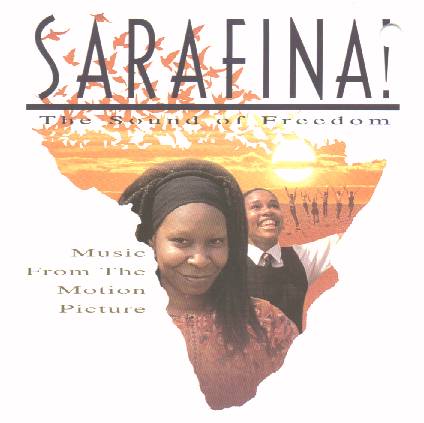
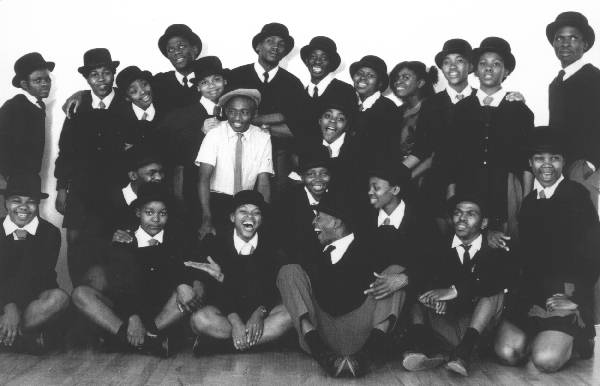
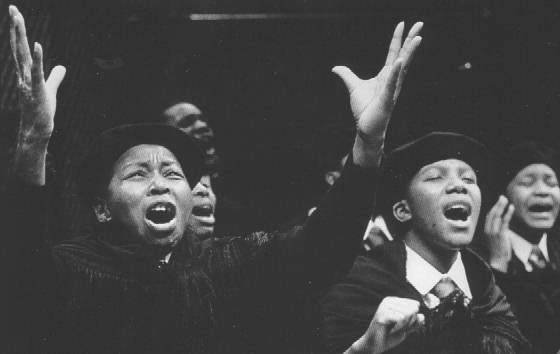
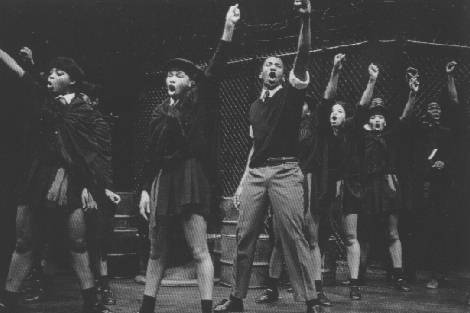
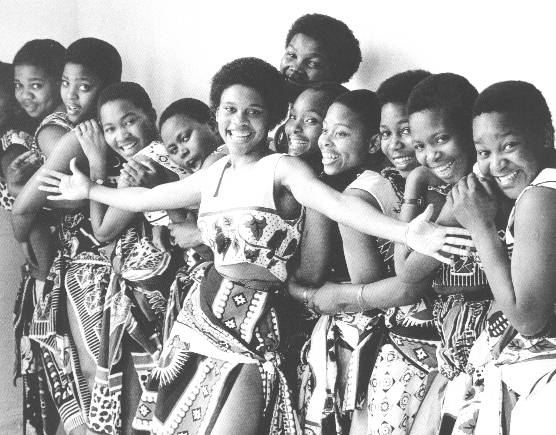
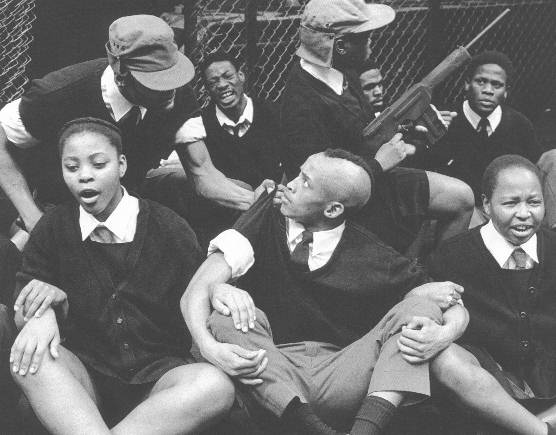
Recently I purchased a record of the Original Broadway Cast Recording of SARAFINA! The theatrical show, which opened in South Africa in 1987 and on Broadway in 1988, includes some of the same songs as the movie, and some additional ones also. I just visited an online CD ordering site, and they are offering a copy of the Broadway recording which includes even more songs on my record. Which means I guess I'll end up buying that one, too. The lyrics (when not in English) are in Zulu, a language I love and am anxious to learn. I recommend both the movie and Broadway soundtracks; both offer up some great songs.
THE POWER OF ONE
3 1/2 STARS because it's not excellent like SAFARFINA! yet it's definitely worth
seeing. It is about a white English boy and his struggles with the prejudice of South
Africa just before the institution of official apartheid laws.
He is harrassed as a small boy in a boarding school by a Nazi Afrikaner who
pisses on him and attempts to kill him. After being taken out of the school, he is sent
to live with an old German. The German teaches him all about
nature and life before he is sent to prison so that the British can show off the culture
of South Africans during WWII. The English boy, P.K., visits the German everyday in
prison and befriends the black prisoners there and takes up boxing.
He soon becomes part of a myth, the story
of the rainmaker who brings all the tribes together, because P.K. arranges a concert in
which all the black tribes sing a song in their native tongue for the white soldiers
(unbeknownst to the soldiers, though, the lyrics call them cowards). This
rainmaker title sticks with him and when he is 18 he is contacted by a black boxer who
wants to fight him inside of one of South Africa's townships. If the black man wins, it is
a triumph for his people, it will urge them to keep up the struggle for freedom; and if he
loses, they will play on the rainmaker myth and P.K. must urge the black to band together.
P.K. wins the fight and thus becomes entangled. He has fallen in love with the daughter
of a conservative Afrikaner who invented some of the laws of apartheid. And one night, during an
attack on a Saturday school that P.K. has set up to teach blacks how to teach English to others,
the daughter is accidentally killed while pushing P.K. out of the way of a policeman's club. This
event makes P.K. want to give up, but he realizes that he is needed more than ever. He and the
black boxer set out on a journey across South Africa to band together the tribes, to make them one.
This is probably more summary than you ever thought you wanted, but I'm thorough. The movie
was actually better than I thought it would be, though it always disappoints me when a movie
takes place before the apartheid laws are actually instituted. The acting was very good,
especially in the case of the actor who played the seven year-old P.K. Also it was quite
intriguing for me to see a white man speaking the native languages like Zulu and Swahili
because I've always wanted to learn Zulu and I've been wondering what the reaction would be
if I showed up in South Africa speaking it.
A DRY WHITE SEASON
3 1/2 STARS I should have written about this movie right after I saw it, because now
I can hardly remember it at all. So don't be surprised if I don't give such a complete
summary as portrayed above. But I do know that it stars Donald Sutherland as an Afrikaner whose
eyes are opened after his black gardener and his gardener's son are both disappear and
are later found out to have been killed by the police. Sutherland loses his family and his job
due to the fact that he has suddenly turned liberal. He is followed and his house is raided and
even bombed. This movie very accurately portrays the injustices of the judicial system in South
Africa during the 1980's (and before and after). It can very graphic at parts, but the good thing is:
justice is served. And this almost seems unlikely and surreal and impossible considering.
The ending makes the viewer happy, but it made me question it all. It made me wonder if it such
a thing could ever really happen. As if to say it was just another Hollywood ending. Check it
out nonetheless.
CRY FREEDOM 3 STARS In
my video guide it got four and a half, but technically I considered it a bit slow, it seemed to
go on almost forever. I don't know how long the movie actually was, but it seemed close
to three hours. None the less, this nonfictional film does shock and dismay you at some moments. The movie
stars Denzel Washington as exiled (and black) activist Steve Biko and Kevin Kline as
liberal, white, newspaper editor and eventual friend of Biko, Donal Woods. Biko was one
of the great black leaders. He was forced to live a life hiding from the authorities, and
was allowed to be in any one room with only one other person. Woods befriends Biko
after much debate between the two. Eventually Biko is taken to prison and dies there.
Much controversy still surrounds his death. Officially he died from a hunger strike. In
recent hearings, though, it has come out that five officers beat Biko almost to death
(supposedly Biko provoked them). And after the beating, instead of taking Biko to one of
the nearby hospitals, he was driven in an ambulance to one that was (if I remember correctly)
almost an hour away. It was the unstable and unnecessarily long ride in the ambulance, along with the actual beating,
that caused Biko's death. Woods found it necessary that the truth be told about Biko's
death and that the people of the world finally realize what was happening in South
Africa. At the end, Woods flees the country to fly to England where he will publish a book he's written on
apartheid. One of the most memorable parts of the movie is at the very end, before the
credits roll. A long list of people's names and the official causes for their deaths, which
include: fell from ten stories, hunger strike, natural causes, unknown, and suicide by strangulation.
It amazed me.
CRY, THE BELOVED COUNTRY
Another 3 STARS I loved the book. It was the first book report book that I
actually thoroughly enjoyed. The film (as well as the book) takes place before
apartheid has actually been instituted, and that is why the story is so pertitent. It
shows us how long all of this has been going on. The crumbling of sane and fair society,
the injustice that befell the people of South Africa, the fear they must have felt.
I have to say that the movie didn't fully capture the essence of the book, I'm obligated
to say so. But I've been told more times than I can count that I have to look at the
film alone, the film as a film, and the not the film as a book made into a film. It stars
James Earl Jones and Richard Harris, and my old pal Leleti Khumalo (from SARAFINA!) also
plays a small role. The movie is well done with wonderful performances. The
injustice isn't too expanded upon or as apparent and complete as it should be, as it
was meant to be. But it provides a great look into South Africa before the institution
of apartheid.
MANDELA
I give it only 2 STARS It's great if you want to know all there is to know
about Nelson Mandela's life, or if you have to do a report about the man. But
for pure apartheid movie entertainment, I wouldn't recommend it. It is a
documentary chronicling the entire life of Mandela, the black leader imprisioned
for some twenty years and who's release in 1990 triggered the virtual end
to apartheid. It can be boring to the person who isn't too interested in the subject
or who has a short attention span. But if you are genuinely interested in the
life of Mandela, and you want to learn just a little bit more about the history
of South Africa and apartheid, then pick this up. It isn't the most enthralling
piece of filmwork, but it is informative.
Apartheid