Images of Apartheid
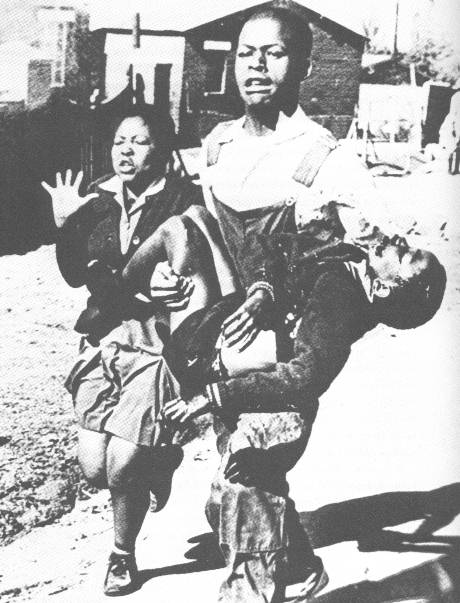
From THE LAND AND PEOPLE OF SOUTH AFRICA: "On that fateful day [June 16, 1976] several
thousand black schoolchildren gathered at the Phefeni School in Orlando West, a suburb of
Soweto. Like thousands of other black school children throughout the country, they were
tired of the inferior education meted out to blacks...The pupils set off on an illegal
protest march but were soon confronted by the police. Tear gas was thrown by the police,
and it is possible that stones were thrown in retaliation. Whether or not this was so,
the police opened fire on the pupils, none of whom was armed. A thirteen-year-old student,
Hector Pieterson, was shot dead. And by the end of the day many others had also been
killed. Within a week 176 lives had been lost." This event is recreated in SARAFINA!
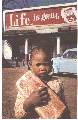
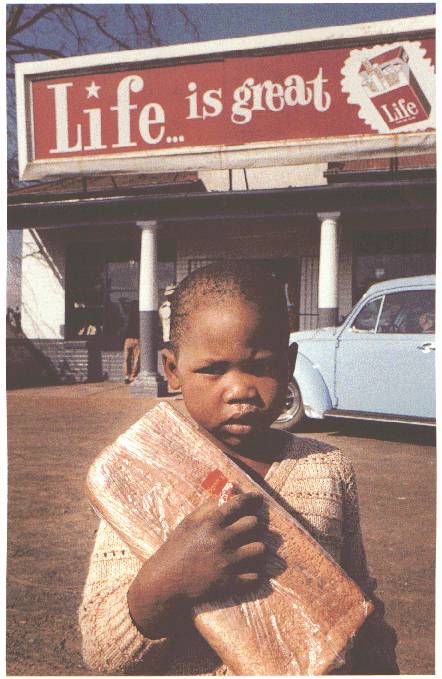
From Why Are They Weeping: South Africans under Apartheid: "A farm laborer's
child on her way home from the local grocery store outside Bloemfontein in the
Orange Free State." This is my favorite picture in the book, a coffee table-style book full of colored pictures narrating the state of South Africa and her
people. The picture itself is quite ironic.
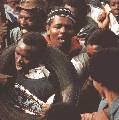
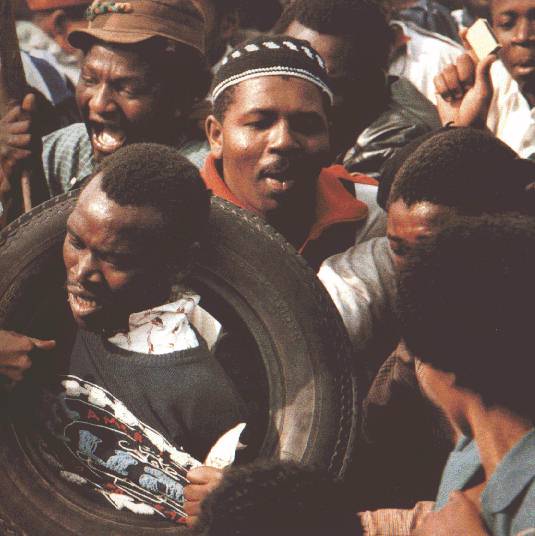
From Why Are They Weeping: South Africans under Apartheid: "A crowd prepares
to 'necklace' a suspected police informant at a funeral in Duncan Village, outside East
London. The necklace--a tire hung around the victim's neck, filled with gasoline,
and set afire--was a popular method of execution during the height of the unrest,
and the word has become part of the South African lexicon. Clergymen saved this
man's life."
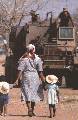
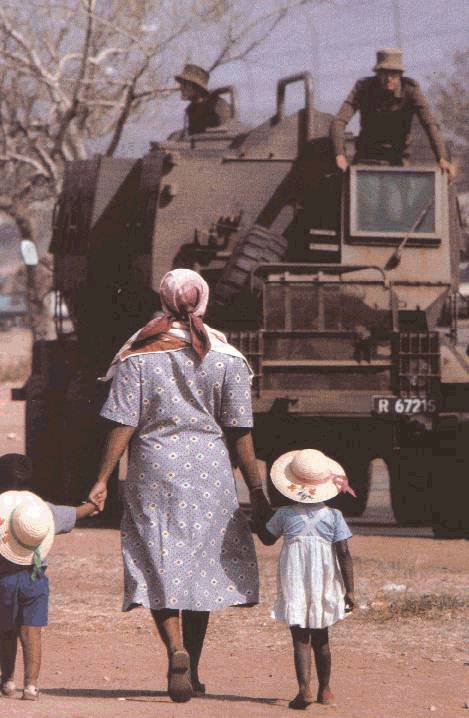
From Why Are They Weeping: South Africans under Apartheid: "Troop patrols and the
armored vehicles known as a Casspir have become a daily feature of life in South Africa's
black townships."
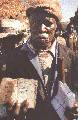
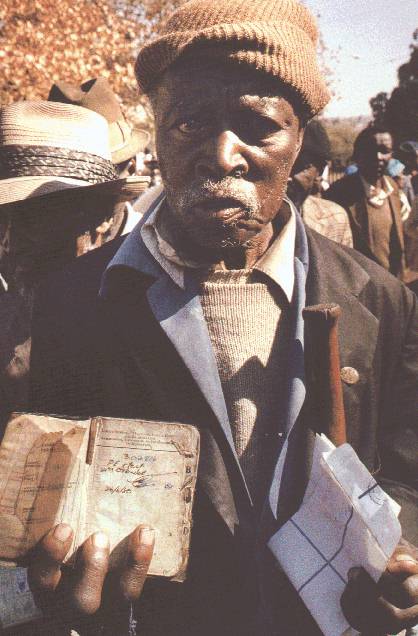
From Why Are They Weeping: South Africans under Apartheid: "The reference book, or pass--one
of South Africa's most infamous symbols of black subjugation--was abolished in 1986 and replaced
with an identity document. Critics contend the new system has simply replaced one form of control
with another; blacks are not entitled to the new card unless they can prove they were
permanent residents of 'white' South Africa before June 1986. This effectively excludes
residents of 'independent' homelands, relegating them to a life of rural poverty."
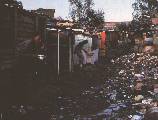
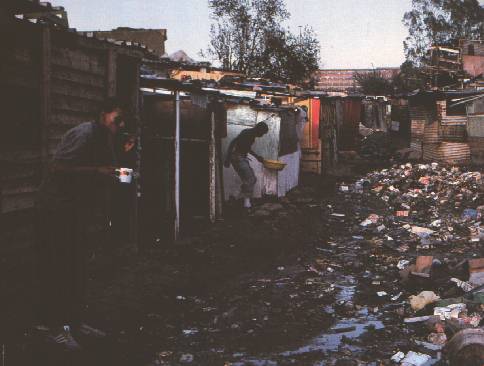
From National Geographic (Feb. '93): "A river of garbage and sewage overflows in a
squatter camp in Alexandra, one of some 60 twonships--including the group of 32
known as Soweto--that ring predominantly white Johannesburg. Living in filmsy
shelters of corrugated metal and discarded wood, Alexandra's perhaps 50,000
squatters get by without heat, electricity, or plumbing. Squatter communities
were illegal under apartheid laws. But urban white South Africa let them grow
because they represent a ready source of labor for which no services need be
provided."
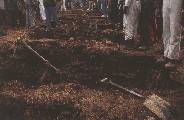
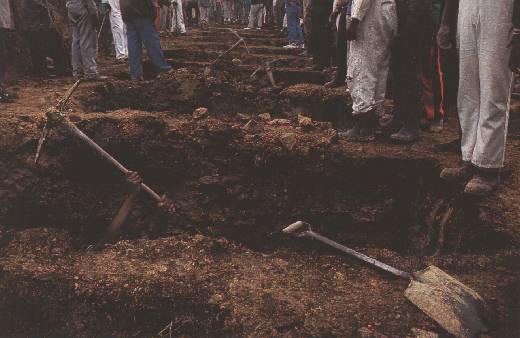
From National Geographic (Feb. '93): "...Not so lucky were 32 Bruntville
residents massacred by a group from the local hostel. Friends dig graves and pay
their final respects. More than 6,000 people have died in black factional
violence in the townships in the past two years."
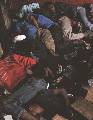
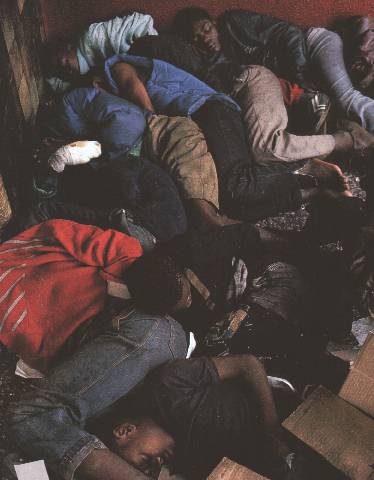
From National Geographic (Feb. '93): "The Zulus call them malunde, street
children. They huddle for warmth and protection on Johannesburg's sidewalks,
sleeping off exhaustion and intoxication from sniffing glue. They beg and
steal for food and video games. For affection and a few rand, many sell their
bodies. Private agencies and churches provide the only services available to
these runaways, who frequently end of in jail, or worse. As many as 15,000
outcast children, some as young as three years old, live on the streets of
Johannesburg."
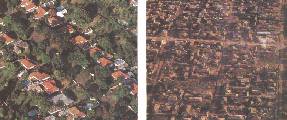
From ILLUSTRATED HISTORY OF SOUTH AFRICA: THE REAL STORY: "A study in contrasts:
blue-watered swimming pools twinkle amidst the lush, wooded gardens of Johannesburg's
northern suburbs (left), while woodsmoke wreaths around dun-coloured houses in the African
township of Tembisa near Pretoria (right)."
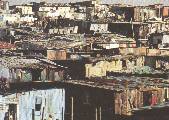
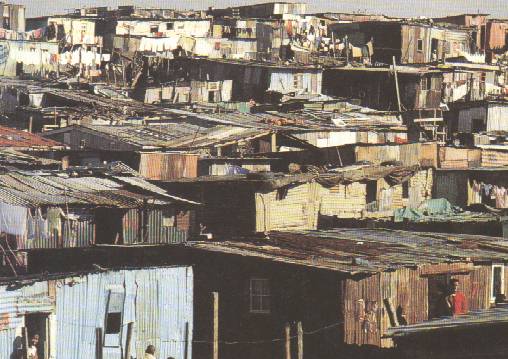
From ILLUSTRATED HISTORY OF SOUTH AFRICA: THE REAL STORY: "Crossroads in 1981. The
settlement became the largest in the western Cape."
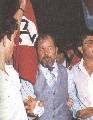
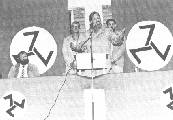
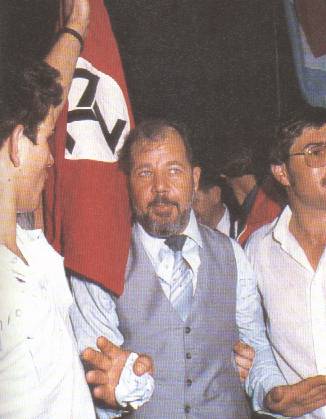
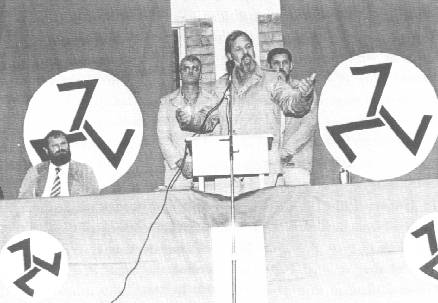
From THE LAND AND PEOPLE OF SOUTH AFRICA: "Eugene Terreblanche, leder of the Afrikaner
Weerstandbeweging (AWB), addresses a gathering of his supporters. The link between the
insignia of the AWB and the Nazi swastika is obvious."
Apartheid
Images of Apartheid
From THE LAND AND PEOPLE OF SOUTH AFRICA: "On that fateful day [June 16, 1976] several
thousand black schoolchildren gathered at the Phefeni School in Orlando West, a suburb of
Soweto. Like thousands of other black school children throughout the country, they were
tired of the inferior education meted out to blacks...The pupils set off on an illegal
protest march but were soon confronted by the police. Tear gas was thrown by the police,
and it is possible that stones were thrown in retaliation. Whether or not this was so,
the police opened fire on the pupils, none of whom was armed. A thirteen-year-old student,
Hector Pieterson, was shot dead. And by the end of the day many others had also been
killed. Within a week 176 lives had been lost." This event is recreated in SARAFINA!
From Why Are They Weeping: South Africans under Apartheid: "A farm laborer's
child on her way home from the local grocery store outside Bloemfontein in the
Orange Free State." This is my favorite picture in the book, a coffee table-style book full of colored pictures narrating the state of South Africa and her
people. The picture itself is quite ironic.
From Why Are They Weeping: South Africans under Apartheid: "A crowd prepares
to 'necklace' a suspected police informant at a funeral in Duncan Village, outside East
London. The necklace--a tire hung around the victim's neck, filled with gasoline,
and set afire--was a popular method of execution during the height of the unrest,
and the word has become part of the South African lexicon. Clergymen saved this
man's life."
From Why Are They Weeping: South Africans under Apartheid: "Troop patrols and the
armored vehicles known as a Casspir have become a daily feature of life in South Africa's
black townships."
From Why Are They Weeping: South Africans under Apartheid: "The reference book, or pass--one
of South Africa's most infamous symbols of black subjugation--was abolished in 1986 and replaced
with an identity document. Critics contend the new system has simply replaced one form of control
with another; blacks are not entitled to the new card unless they can prove they were
permanent residents of 'white' South Africa before June 1986. This effectively excludes
residents of 'independent' homelands, relegating them to a life of rural poverty."
From National Geographic (Feb. '93): "A river of garbage and sewage overflows in a
squatter camp in Alexandra, one of some 60 twonships--including the group of 32
known as Soweto--that ring predominantly white Johannesburg. Living in filmsy
shelters of corrugated metal and discarded wood, Alexandra's perhaps 50,000
squatters get by without heat, electricity, or plumbing. Squatter communities
were illegal under apartheid laws. But urban white South Africa let them grow
because they represent a ready source of labor for which no services need be
provided."
From National Geographic (Feb. '93): "...Not so lucky were 32 Bruntville
residents massacred by a group from the local hostel. Friends dig graves and pay
their final respects. More than 6,000 people have died in black factional
violence in the townships in the past two years."
From National Geographic (Feb. '93): "The Zulus call them malunde, street
children. They huddle for warmth and protection on Johannesburg's sidewalks,
sleeping off exhaustion and intoxication from sniffing glue. They beg and
steal for food and video games. For affection and a few rand, many sell their
bodies. Private agencies and churches provide the only services available to
these runaways, who frequently end of in jail, or worse. As many as 15,000
outcast children, some as young as three years old, live on the streets of
Johannesburg."
From ILLUSTRATED HISTORY OF SOUTH AFRICA: THE REAL STORY: "A study in contrasts:
blue-watered swimming pools twinkle amidst the lush, wooded gardens of Johannesburg's
northern suburbs (left), while woodsmoke wreaths around dun-coloured houses in the African
township of Tembisa near Pretoria (right)."
From ILLUSTRATED HISTORY OF SOUTH AFRICA: THE REAL STORY: "Crossroads in 1981. The
settlement became the largest in the western Cape."
From THE LAND AND PEOPLE OF SOUTH AFRICA: "Eugene Terreblanche, leder of the Afrikaner
Weerstandbeweging (AWB), addresses a gathering of his supporters. The link between the
insignia of the AWB and the Nazi swastika is obvious."
Apartheid